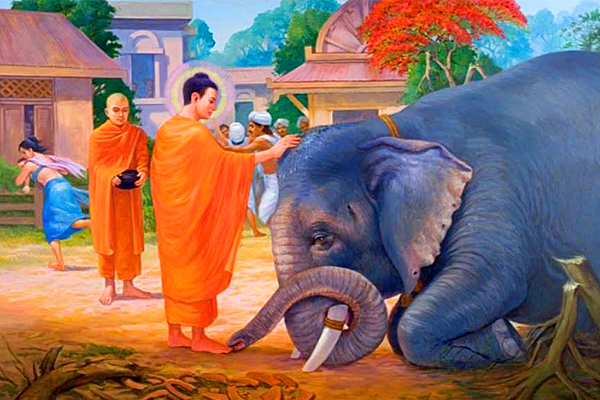
Gautama Buddha saw the qualities embodied in the elephant as worldly manifestations. Even Buddha has been associated with the elephant since birth. More than 2,500 years ago there was a king named Suddhodana of the Shakya dynasty. Who was married to Mahamaya, the Princess of Kolian, who was beautiful and intelligent as well. Suddhodana was also a Great King, the capital of his kingdom was at Kapilvastu.
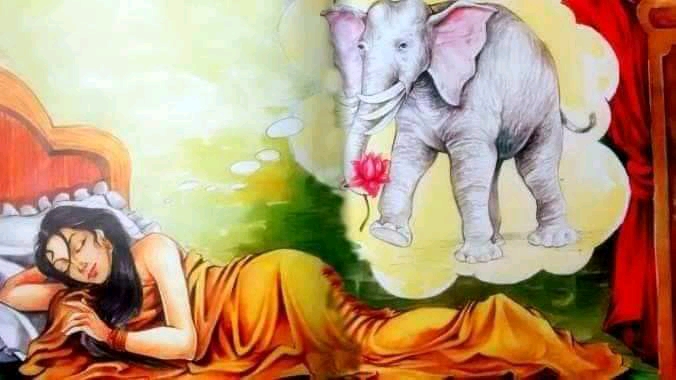
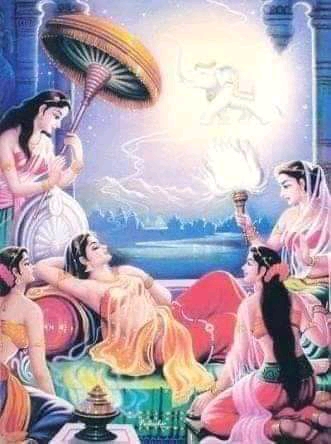
It is said that when Buddha’s mother Mahamaya became pregnant, she saw in a dream that she was being adorned with heavenly clothes and ornaments in Devaloka and a white elephant with a white lotus in her trunk revolved around her and entering her womb. As soon as he woke up, he felt a divine omen. This experience helped to make the elephant a symbol of enlightenment.
While gaining intellectual power, the fickle mind is indicated as a wild elephant, which destroys its own path, similarly an uncontrolled mind destroys itself. A controlled mind after various religious practices is indicated as a white elephant, which is mighty and effective, similarly a controlled mind is calm and obedient through which complete control over the will power can be attained. In Buddhism, elephants are also considered a symbol of a spiritual lifestyle, being loyal to their companions, loyal to family, calm in all situations and using ears to listen to and analyze problems. In Buddhism, the elephant is also known for its superior traits of strength and wisdom. The use of an elephant on the top of a pillar in intellectual architecture signifies the light of knowledge. For the propagation of knowledge in Buddhism the intellectual person is depicted riding an elephant, from which they awaken us to the consciousness of fate.
 Enlighten Me